Best Heatmap Software in 2026
Compare the best heatmap software in 2026—DeepSync, Hotjar, Microsoft Clarity, FullStory, Lucky Orange, Mouseflow, and Contentsquare—on click, scroll, and attention maps, AI analysis, pricing, and team fit.

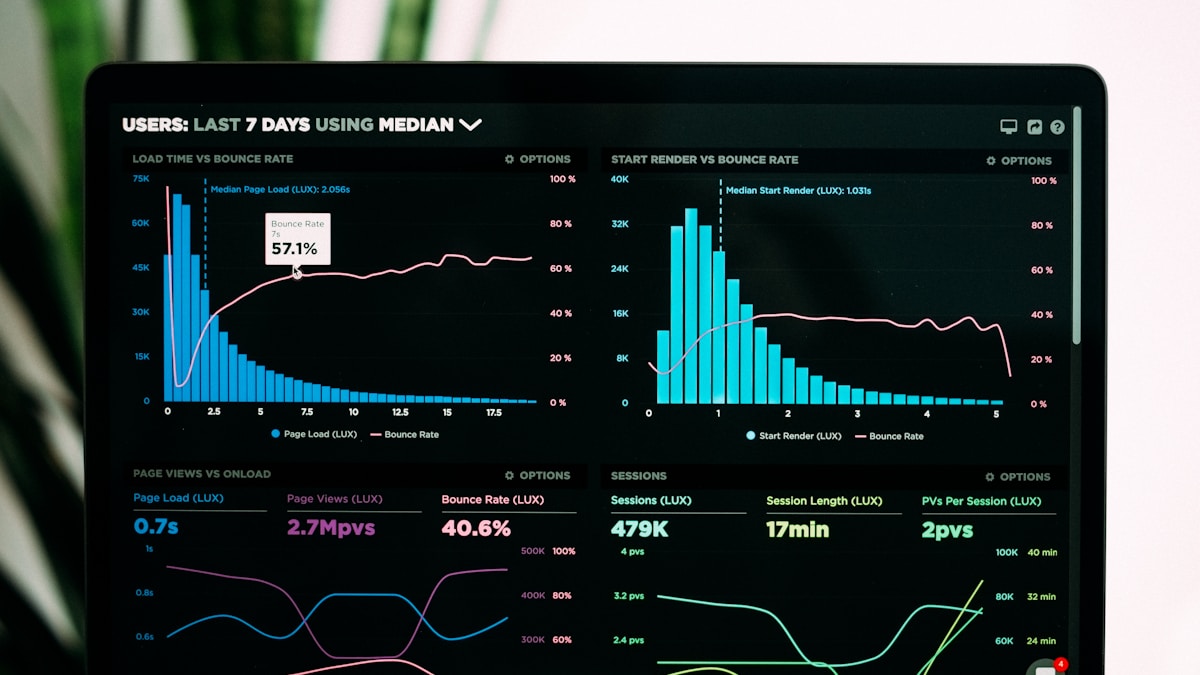
Your landing page has a primary CTA above the fold—but heatmaps reveal that 73% of visitors never scroll far enough to see it. Click maps show users hammering a non-interactive hero image. Scroll maps expose a pricing table that only 12% of mobile sessions reach.
That is the difference between knowing your bounce rate and understanding where attention actually goes. Heatmap software aggregates interaction data across hundreds or thousands of sessions and overlays it on your page layout—turning invisible behavior patterns into visual evidence your product, marketing, and CRO teams can act on.
In 2026, heatmap software spans free tools with unlimited capture, mid-market UX suites built for marketers, and enterprise digital experience platforms with AI-driven zone analysis. The market is crowded. Feature grids look identical. Pricing models diverge wildly. And the wrong choice costs you months of tool sprawl, review bottlenecks, or heatmaps that nobody trusts because segmentation was never configured correctly.
This guide compares seven heatmap software options fairly: DeepSync, Hotjar, Microsoft Clarity, FullStory, Lucky Orange, Mouseflow, and Contentsquare. We cover heatmap types, AI capabilities, session replay integration, pricing posture, privacy controls, and honest buyer fit—so you can shortlist vendors based on how your team actually optimizes pages, not checkbox marketing alone.
Table of Contents
- Quick Summary
- The Problem Heatmap Software Solves
- What Is Heatmap Software?
- Types of Heatmaps to Evaluate
- How We Evaluate Heatmap Software
- Heatmap Software Overview
- Feature Comparison Tables
- Pricing and Value Comparison
- AI and Heatmap Analysis Compared
- Privacy, Performance, and Compliance
- Which Tool Fits Which Team
- Real-World Selection Examples
- Best Practices for Evaluating Heatmap Vendors
- Common Mistakes When Choosing Heatmap Software
- Frequently Asked Questions
- Key Takeaways
- Conclusion
Quick Summary
Heatmap software in one sentence
Heatmap software visualizes aggregated user interactions—clicks, scrolls, mouse movement, and attention—on your page layout so teams can see where users engage, ignore, or struggle without watching every session individually.
- Core value: Heatmaps answer where users look and click on a page; session replay answers what happened in sequence—best used together.
- Free entry point: Microsoft Clarity offers unlimited heatmaps and session replay at no cost—strong baseline, with trade-offs in advanced segmentation and enterprise governance.
- Unified behavior stack: DeepSync combines click, scroll, and attention heatmaps with session recordings, funnels, and AI summaries for teams wanting one behavior intelligence platform.
- Marketing/CRO heritage: Hotjar, Lucky Orange, and Mouseflow popularized heatmaps for landing pages, e-commerce, and form optimization.
- Product/engineering depth: FullStory emphasizes searchable DX data with heatmaps tied to frustration signals and technical diagnostics.
- Enterprise scale: Contentsquare leads for large programs with zone-based analytics, journey intelligence, and organizational governance.
- 2026 buyer priority: Evaluate segmentation depth, device filters, AI-assisted pattern detection, replay integration, and performance impact—not heatmap color palettes alone.
The Problem Heatmap Software Solves
Aggregate analytics tells you that conversion dropped. A/B test tools tell you which variant won. Neither shows you where visual attention misaligned with your design intent.
Teams without heatmap software routinely optimize the wrong layer:
- They redesign hero copy when users never scroll past the first viewport.
- They A/B test button colors when the real issue is a dead click on a decorative image users mistake for a link.
- They add more navigation items when heatmaps would show existing links are ignored entirely.
- They blame traffic quality when mobile scroll maps reveal critical pricing information sits below an invisible fold on small screens.
Usability testing catches these issues—but for small samples and slow cycles. Heatmap software offers visual aggregation at scale: every click, scroll milestone, and movement pattern compressed into a single overlay you can filter by device, traffic source, date range, and conversion outcome.
The teams that extract the most value treat heatmaps as hypothesis generators, not verdict machines. A hot zone on the wrong element is a signal to investigate with session replay, not an automatic mandate to move your CTA.
What Is Heatmap Software?
Heatmap software is analytics tooling that captures user interaction events on web pages (and sometimes mobile apps) and renders them as color-coded overlays on a screenshot or live DOM representation of the page.
Common capture inputs include:
- Click and tap events — where users interact, including dead clicks on non-interactive elements
- Scroll depth — how far users scroll before exiting, aggregated by percentage of page height
- Mouse movement and hover — proxy signals for attention (more reliable on desktop than mobile)
- Attention or engagement zones — time-based aggregation showing which page regions held focus longest
Unlike session replay, which reconstructs individual visits, heatmaps aggregate many sessions onto one visual canvas. That makes them ideal for page-level optimization: landing pages, pricing tables, checkout flows, onboarding screens, and long-form content.
Modern heatmap software in 2026 typically bundles:
- Device and viewport segmentation (desktop, mobile, tablet)
- Date range and traffic source filters
- URL and SPA route matching
- Integration with session replay for drill-down
- AI-assisted summaries of friction patterns
- Export and sharing for stakeholder reviews
For a foundational overview of how heatmaps work, see our guide on what website heatmaps are.
Types of Heatmaps to Evaluate
Not every platform ships every heatmap type. When comparing vendors, verify which map types matter for your pages.
| Heatmap type | What it shows | Best for |
|---|---|---|
| Click / tap map | Aggregated click positions | CTA visibility, dead clicks, navigation usage |
| Scroll map | % of users reaching depth milestones | Content placement, fold issues, long-page structure |
| Move / hover map | Mouse movement density (desktop) | Attention flow on complex layouts, hero sections |
| Attention / engagement map | Time-weighted zone engagement | Above-the-fold hierarchy, content prioritization |
| Rage click map | Repeated clicks in same area | Broken buttons, slow responses, UX frustration |
Diagram recommendation: Heatmap types on one page
Create a single landing page wireframe with four overlay layers labeled Click, Scroll, Move, and Attention—each highlighting different insights on the same layout. Helps buyers understand why teams need multiple map types, not one universal heatmap.
For a deeper breakdown of when to use each type, read click heatmaps vs scroll heatmaps vs attention heatmaps.

How We Evaluate Heatmap Software
We score heatmap platforms across dimensions that matter in production—not demo environments:
- Heatmap type coverage — click, scroll, move, attention, rage/dead click detection
- Segmentation depth — device, browser, campaign, conversion vs non-conversion, custom events
- Replay integration — one-click jump from heatmap anomaly to individual sessions
- AI analysis — automated friction detection, zone summaries, anomaly alerts
- Performance impact — script weight, sampling options, Core Web Vitals compatibility
- Privacy controls — masking, consent integration, retention policies
- Pricing transparency — session limits, pageview caps, seat-based vs usage-based models
- Workflow fit — who on your team will use it daily (marketing, product, UX, engineering)
Heatmap Software Overview
DeepSync
DeepSync is a behavior intelligence platform combining heatmaps, session recordings, funnels, and AI-powered insights. Heatmaps support click, scroll, and attention views with segmentation by device, traffic source, and conversion outcome. AI summaries highlight friction zones without requiring analysts to interpret raw overlays manually.
Strengths: Unified stack reduces tool sprawl; AI-assisted review scales heatmap analysis; privacy-conscious defaults; strong fit for SaaS, e-commerce, and growth teams wanting Clarity-class accessibility with richer workflows.
Trade-offs: Newer brand vs established enterprise incumbents; teams deeply invested in Contentsquare or FullStory org-wide may prefer incumbent contracts.
Best for: Product, growth, and UX teams wanting heatmaps + replay + AI in one platform.
Microsoft Clarity
Microsoft Clarity offers free, unlimited heatmaps and session replay for websites. Click maps, scroll maps, and area insights (engagement zones) cover baseline needs. Copilot-style insights help surface patterns.
Strengths: Zero cost removes adoption friction; unlimited capture on many sites; Microsoft ecosystem trust; solid baseline for startups and content sites.
Trade-offs: Advanced segmentation and enterprise governance lag dedicated DX suites; less suited for complex multi-product organizations needing deep API integration.
Best for: Cost-sensitive teams, blogs, SMB sites, and anyone needing baseline heatmaps before upgrading.
Hotjar
Hotjar pioneered heatmaps for marketers. Observe (heatmaps + replay) remains central, with feedback widgets and surveys as differentiators. Heatmap filters by device and behavior; integration with recordings is mature.
Strengths: Approachable UX; strong brand recognition; good for marketing and CRO teams; surveys complement visual data.
Trade-offs: Pricing scales with session volume; advanced AI and enterprise features trail FullStory/Contentsquare; some teams outgrow session limits.
Best for: Marketing teams, landing page optimization, e-commerce CRO, agencies running client sites.
FullStory
FullStory positions heatmaps within a digital experience intelligence platform. Click maps and scroll maps tie into frustration signals, error tracking, and searchable session data. Strong developer and product engineering audience.
Strengths: Deep DX data model; excellent for debugging and product analytics integration; frustration scoring enriches heatmap interpretation.
Trade-offs: Premium pricing; may exceed needs for simple marketing heatmap use cases; implementation depth required for full value.
Best for: Product and engineering teams at mid-market and enterprise companies prioritizing DX programs.
Lucky Orange
Lucky Orange targets SMB e-commerce and marketing with heatmaps, session replay, live chat, and conversion funnels. Dynamic heatmaps adapt to responsive layouts; filtering by device and visitor type is straightforward.
Strengths: All-in-one SMB suite; live chat plus heatmaps unique combo; approachable pricing tiers; good for Shopify and WooCommerce stores.
Trade-offs: Less enterprise governance; AI depth limited vs FullStory/Contentsquare; scaling teams may hit feature ceilings.
Best for: E-commerce store owners, SMB marketers, agencies managing multiple small client sites.
Mouseflow
Mouseflow emphasizes CRO workflows with click, scroll, movement, and attention heatmaps plus form analytics and funnel tracking. Friction scores auto-flag problematic sessions.
Strengths: Strong form analytics complement heatmaps; funnel integration; good for checkout and lead-gen optimization.
Trade-offs: UI feels utilitarian vs Hotjar polish; enterprise features moderate; AI summaries less prominent than newer platforms.
Best for: CRO specialists, form-heavy sites, teams optimizing checkout and lead capture flows.
Contentsquare
Contentsquare is an enterprise digital experience platform. Zone-based heatmaps, journey analytics, and AI-powered insights serve large organizations running continuous optimization programs across many markets and brands.
Strengths: Enterprise scale; advanced zone and journey analysis; organizational governance; strong for global brands and complex sites.
Trade-offs: High cost and implementation overhead; overkill for startups and small teams; sales-led procurement typical.
Best for: Enterprise digital experience teams, large e-commerce, financial services, and global brands with dedicated analytics orgs.
Contextual CTA
If your team spends hours interpreting heatmap screenshots without clear next steps, AI-assisted heatmap analysis can surface friction zones and prioritize pages automatically. Explore DeepSync heatmaps with built-in behavior intelligence and session replay drill-down.
Feature Comparison Tables
Core heatmap capabilities
| Capability | DeepSync | Microsoft Clarity | Hotjar | FullStory | Lucky Orange | Mouseflow | Contentsquare |
|---|---|---|---|---|---|---|---|
| Click / tap heatmaps | Yes | Yes | Yes | Yes | Yes | Yes | Yes |
| Scroll heatmaps | Yes | Yes | Yes | Yes | Yes | Yes | Yes |
| Move / hover heatmaps | Yes | Limited | Yes | Yes | Yes | Yes | Yes |
| Attention / zone maps | Yes | Yes (area insights) | Yes | Yes | Yes | Yes | Advanced |
| Dead / rage click detection | Yes | Yes | Yes | Yes | Yes | Yes | Yes |
| Device segmentation | Yes | Yes | Yes | Yes | Yes | Yes | Yes |
| Conversion-based filters | Yes | Basic | Yes | Yes | Yes | Yes | Advanced |
| Session replay integration | Yes | Yes | Yes | Yes | Yes | Yes | Yes |
Platform and workflow features
| Capability | DeepSync | Microsoft Clarity | Hotjar | FullStory | Lucky Orange | Mouseflow | Contentsquare |
|---|---|---|---|---|---|---|---|
| AI heatmap / friction summaries | Yes | Copilot insights | Limited | Yes | Limited | Limited | Advanced |
| Funnels / journeys | Yes | Basic | Yes | Advanced | Yes | Yes | Advanced |
| Form analytics | Yes | Basic | Yes | Yes | Yes | Strong | Yes |
| Feedback / surveys | No | No | Yes | Limited | Yes (chat) | Limited | Yes |
| Free tier | Trial / freemium | Free (unlimited) | Limited free | No | Trial | Trial | No |
| Mobile app heatmaps | Yes | Web-focused | Web-focused | Yes | Web-focused | Web-focused | Yes |
| Typical buyer | Growth + product teams | Startups, content sites | Marketing / CRO | Product / engineering | SMB e-commerce | CRO + forms | Enterprise DX |
Pricing and Value Comparison
Heatmap software pricing models vary significantly. Understanding the model prevents budget surprises at scale.
| Vendor | Pricing model (typical) | Free option | Scaling consideration |
|---|---|---|---|
| DeepSync | Usage / plan tiers | Trial available | Unified pricing for heatmaps + replay + AI |
| Microsoft Clarity | Free | Unlimited on many sites | No direct cost; limited advanced features |
| Hotjar | Session-based plans | Limited free tier | Costs rise with traffic; Observe bundle pricing |
| FullStory | Session / plan tiers | No free tier | Premium; justify with DX program scope |
| Lucky Orange | Traffic / plan tiers | Trial | Affordable SMB entry; scales moderately |
| Mouseflow | Session-based plans | Trial | Form analytics value on lead-gen sites |
| Contentsquare | Enterprise contract | No | Sales-led; budget for implementation |
Pricing note
Published pricing changes frequently. Treat these models as directional. Run a 30-day pilot on your highest-traffic landing page with real segmentation needs before committing annually.
Value framing: Clarity wins on cost for baseline heatmaps. DeepSync wins on unified behavior intelligence without assembling three tools. Hotjar and Lucky Orange win on marketer-friendly workflows. FullStory and Contentsquare win when heatmaps are one layer in a funded DX program—not a standalone purchase.
AI and Heatmap Analysis Compared
Manual heatmap review does not scale. A high-traffic homepage may accumulate thousands of sessions per week. AI-assisted analysis has become a 2026 differentiator:
| Platform | AI heatmap capabilities |
|---|---|
| DeepSync | Friction zone detection, page-level summaries, anomaly alerts, prioritized review queues |
| Microsoft Clarity | Copilot insights, dead click highlights, rage click summaries |
| Hotjar | Emerging AI features; core value remains manual Observe workflows |
| FullStory | Searchable DX data, frustration scoring, session summaries tied to heatmap zones |
| Lucky Orange | Basic automated alerts; manual review remains primary |
| Mouseflow | Friction scores on sessions; limited heatmap-specific AI |
| Contentsquare | Advanced zone analysis, journey AI, executive dashboards |
For teams drowning in heatmap screenshots, AI prioritization is not a luxury—it is how heatmap programs survive past the first quarter. Read more in our guide on AI heatmap analysis.
Privacy, Performance, and Compliance
Heatmap software captures interaction data that may include personal information if forms and URLs are not masked correctly.
Privacy checklist for any vendor:
- Field-level masking for passwords, payment data, and PII
- Consent banner integration (GDPR, CPRA, and regional variants)
- Configurable data retention (30/60/90 days common)
- URL block lists for account settings and sensitive flows
- Data processing agreements with documented subprocessors
Performance checklist:
- Asynchronous event batching
- Configurable sampling on high-traffic pages
- Published guidance on Core Web Vitals impact
- Staging environment testing before full rollout
The Mozilla Developer Network emphasizes data minimization—a principle that applies directly to heatmap capture configuration. Nielsen Norman Group research consistently shows users trust transparent tracking disclosures over invisible capture.
Which Tool Fits Which Team
| Team profile | Recommended starting point | Upgrade path |
|---|---|---|
| Startup / indie SaaS | Microsoft Clarity or DeepSync trial | DeepSync when AI + funnels needed |
| Marketing / CRO agency | Hotjar or Lucky Orange | Mouseflow for form-heavy clients |
| E-commerce SMB | Lucky Orange or Hotjar | DeepSync for unified intelligence |
| Product-led growth | DeepSync or FullStory | FullStory for deep engineering DX |
| Enterprise digital experience | Contentsquare or FullStory | Contentsquare for global governance |
| Content / media site | Microsoft Clarity | DeepSync for monetization page optimization |
No single vendor wins every segment. Clarity is hard to beat on price for baselines. Contentsquare is hard to beat on enterprise journey depth. The question is whether you need standalone heatmaps or behavior intelligence infrastructure.
Real-World Selection Examples
Example 1: B2B SaaS pricing page
Need: Compare heatmaps for trial vs non-trial visitors on /pricing; drill into sessions where users rage-click the enterprise tier.
Fit: DeepSync or FullStory for conversion segmentation + replay. Clarity works if budget is zero and segmentation needs are basic.
Example 2: Shopify store with 50k monthly sessions
Need: Click maps on product pages, scroll maps on checkout, live chat for abandoned carts.
Fit: Lucky Orange or Hotjar. Mouseflow if form/checkout analytics dominate.
Example 3: Enterprise bank redesigning digital onboarding
Need: Zone analysis across markets, governance, journey analytics, legal review workflows.
Fit: Contentsquare or FullStory. Clarity insufficient for governance requirements.
Example 4: Content publisher optimizing ad placement
Need: Scroll maps on long articles, attention zones around ad slots, minimal cost.
Fit: Microsoft Clarity initially; DeepSync when AI prioritization needed across hundreds of article templates.
Best Practices for Evaluating Heatmap Vendors
- Pilot on one high-value page — pricing, checkout, or signup—not your entire sitemap.
- Require device segmentation — mobile and desktop heatmaps often tell opposite stories.
- Test replay drill-down — every heatmap anomaly should link to individual sessions in two clicks or fewer.
- Measure script impact — run Lighthouse before and after snippet installation on staging.
- Involve legal early — configure masking and consent before capture scales.
- Define review cadence — weekly heatmap review tied to current experiments, not ad hoc screenshots.
- Compare AI output quality — run the same page through two vendors; evaluate summary accuracy.
- Check SPA support — if you use React, Vue, or Next.js, verify route-change capture in your pilot.
Common Mistakes When Choosing Heatmap Software
Choosing on price alone
Free tools solve baseline needs. They may not solve segmentation, AI review, or cross-team workflows when heatmaps become central to your optimization program.
Ignoring mobile heatmaps
Over 60% of traffic is mobile on many sites. Desktop-only heatmap review misses fold issues, tap target problems, and keyboard overlay interactions.
Treating heatmaps as proof without replay
Aggregation hides individual failure modes. A cold CTA zone might mean users did not see it—or saw it and chose not to click. Confirm with session replay.
Buying enterprise software for startup needs
Contentsquare and FullStory excel at scale. A five-person startup rarely needs their implementation overhead.
Skipping conversion-based segmentation
Heatmaps filtered by converters vs abandoners reveal fundamentally different patterns. Tools with weak segmentation produce generic, unusable overlays.
Tool sprawl
Heatmaps in one platform, analytics in another, replay in a third. Unified platforms like DeepSync reduce context switching and shared filter taxonomies.
Key Takeaways
- Heatmap software visualizes aggregated clicks, scrolls, and attention—revealing where users engage or ignore your layout.
- No single vendor wins every segment: Clarity on cost, Hotjar/Lucky Orange on marketing UX, FullStory/Contentsquare on enterprise DX, DeepSync on unified behavior intelligence.
- Always pair heatmaps with session replay—aggregation shows patterns; replay explains individual behavior.
- Segment by device and conversion outcome; generic heatmaps mislead more often than they help.
- AI-assisted analysis is essential for scaling heatmap review beyond manual screenshot interpretation.
- Privacy masking and consent must be configured before capture scales—not after legal review.
- Pilot one high-value page with real traffic before annual contracts.
Conclusion
Heatmap software has matured from a novelty overlay into standard infrastructure for conversion optimization, UX validation, and content placement. The best platform for your team depends less on whether a vendor draws red and blue gradients and more on segmentation depth, replay integration, AI review capacity, and how cleanly heatmaps fit your existing workflow.
Start with one page that matters—your pricing screen, checkout flow, or primary landing page. Collect a week of segmented data. Compare what click maps, scroll maps, and attention zones reveal against what your analytics dashboard already told you. The gap between those two views is where heatmap software earns its place in your stack.
Ready to see where users actually click and scroll?
Start with DeepSync heatmaps—combine click, scroll, and attention maps with session recordings, funnels, and AI-powered friction detection in one platform built for modern product and growth teams. View pricing or read the documentation to get set up in minutes.
Frequently Asked Questions
Related articles

Stay in the loop
Get the latest insights on product analytics and user behavior delivered to your inbox.


