Website Analytics vs Product Analytics
Website analytics tracks traffic and pages; product analytics tracks in-app events and retention. Learn when to use each—and how behavior analytics bridges the gap.

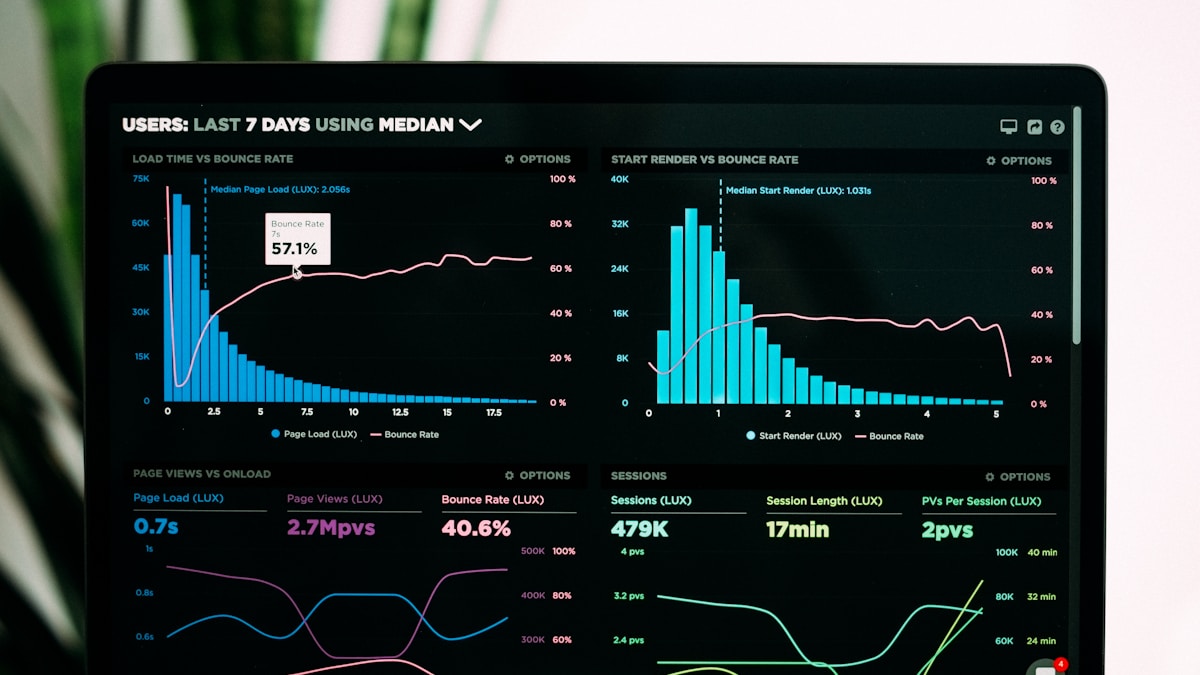
Your marketing lead lives in website analytics—sessions, channels, landing pages. Your product lead lives in product analytics—activation events, feature adoption, retention cohorts. Both dashboards show "users," but they answer different questions about different stages of the customer lifecycle.
Understanding website analytics vs product analytics prevents blind spots: optimizing blog traffic while trial activation collapses, or polishing in-app onboarding while the marketing site sends unqualified signups. This guide compares both disciplines, shows where they overlap, and explains how user behavior analytics bridges the gap between pre-signup and in-product experience.
Table of Contents
- Quick Summary
- Definitions
- Side-by-Side Comparison
- What Website Analytics Does Best
- What Product Analytics Does Best
- The Gap Between Them
- How Behavior Analytics Bridges the Gap
- Choosing Your Stack
- Real-World Scenarios
- Frequently Asked Questions
- Key Takeaways
- Conclusion
Quick Summary
Website vs product analytics in one sentence
Website analytics measures marketing site traffic and pages; product analytics measures in-app events and retention—behavior analytics adds interaction context to both.
- Website analytics: Traffic, channels, pageviews, marketing conversion (visitor → lead/signup).
- Product analytics: Events, funnels, cohorts, retention, feature usage (signup → active user).
- Overlap zone: Signup flow, onboarding, pricing page—touched by both stacks.
- Behavior analytics role: Explains why metrics move via replay, heatmaps, frustration signals.
- Best practice: Use both plus behavior layer on high-intent URLs and flows.
Definitions
Website analytics (web analytics)
Measures public-facing web properties: marketing sites, landing pages, blogs, documentation portals. Typical tools: Google Analytics, Adobe Analytics, Plausible. Core metrics: sessions, users, pageviews, bounce rate, traffic sources, goal completions.
Product analytics
Measures in-app or authenticated product usage: feature clicks, workflows completed, retention, churn, experiments. Typical tools: Mixpanel, Amplitude, PostHog (also offers web). Core metrics: DAU/MAU, activation rate, feature adoption, cohort retention.
User behavior analytics
Measures how users interact with pages and flows—clicks, scrolls, paths, rage clicks, session replay. Overlaps both website and product contexts. DeepSync focuses here: session recordings, heatmaps, funnels, journeys.
Side-by-Side Comparison
| Dimension | Website analytics | Product analytics | Behavior analytics |
|---|---|---|---|
| Primary scope | Marketing site, content | Authenticated product | Any interactive surface |
| Unit of analysis | Page, session | User, event | Session, interaction |
| Key questions | Where did traffic come from? | Do users retain? | Why did users struggle? |
| Strength | Channel attribution, SEO | Cohorts, feature usage | Qualitative context at scale |
| Weakness | Shallow interaction detail | Weak on marketing UX | Needs workflow to act |
| Typical owner | Marketing, growth | Product, data | Product, UX, CRO |
For Google Analytics specifically vs heatmaps, see Heatmaps vs Google Analytics.
What Website Analytics Does Best
- Traffic attribution — Which campaigns drive visits and leads?
- Content performance — Which blog posts assist conversion?
- Geographic and device distribution — Where is audience located?
- Marketing funnel to signup — Landing → pricing → form submit (page-level)
Website analytics struggles to explain why a landing page converts poorly—only that it does. Pair with heatmaps and session replay on top entry pages.
What Product Analytics Does Best
- Activation and onboarding — Which steps predict long-term retention?
- Feature adoption — Do users discover key capabilities?
- Cohort analysis — How does March signup cohort retain vs April?
- Experiment analysis — Did feature flag change behavior?
Product analytics is event-centric—you must instrument events deliberately. It often underinvests in pre-signup marketing UX where users decide whether to try your product at all.
The Gap Between Them
The handoff from marketing site to product is where teams lose visibility:
| Stage | Website analytics sees | Product analytics sees | Gap |
|---|---|---|---|
| Pricing page visit | Pageview | Often nothing until signup | Interaction detail |
| Signup form | Goal completion | Signup event | Field-level friction |
| Onboarding | May miss if same domain | Step events | Visual UX failures |
| Upgrade page | Pageview if web | Upgrade event | Hesitation, rage clicks |
Users experience one continuous journey. Your tools often split it at the signup boundary.
How Behavior Analytics Bridges the Gap
Behavior analytics applies before and after signup on any page with a DOM:
- Marketing site — Replay pricing hesitation; heatmap CTA cold zones; rage clicks on signup.
- Onboarding — Funnel drop-off with replay on failed steps (even before full product event instrumentation).
- Upgrade flows — Journey loops between billing and feature pages.
DeepSync unifies session recordings, heatmaps, funnels, user journeys, and AI insights—so marketing and product teams share one friction vocabulary.
Compare with dedicated product analytics platforms in our DeepSync vs PostHog comparison when evaluating stack overlap.
Choosing Your Stack
| Team size / stage | Recommended combination |
|---|---|
| Early startup | Behavior analytics (DeepSync) + lightweight web analytics |
| Growth SaaS | Web analytics + product analytics + behavior layer on key flows |
| E-commerce | Web analytics + behavior on checkout + product analytics for app if applicable |
| Enterprise | Full stack with shared dashboards and aligned event taxonomy |
Startups often start with behavior analytics because every signup matters and qualitative depth beats aggregate noise at low volume.
Real-World Scenarios
Scenario 1: Traffic up, signups flat
Website analytics: Blog traffic +40%. Product analytics: Signups unchanged. Behavior analytics: Replay shows blog readers never reach pricing—missing CTA in content. Fix: Contextual product links; signup +12%.
Scenario 2: Signups up, activation down
Website analytics: Signup goal +25%. Product analytics: Week-one activation -8%. Behavior analytics: Onboarding replay shows skipped integration step. Fix: Required setup checklist; activation recovers.
Scenario 3: PostHog for product, need marketing UX
Teams using PostHog for product events often add DeepSync for marketing site replay and heatmaps—see comparison page.
Key Takeaways
- Website analytics owns traffic and marketing pages; product analytics owns in-app events and retention.
- The signup boundary is where visibility often breaks—behavior analytics spans both sides.
- Use all three layers: web for channels, product for retention, behavior for UX context.
- Align teams on shared URLs and flows worth monitoring with replay and heatmaps.
Conclusion
Website analytics and product analytics are complementary—not competing. The teams that win connect them with behavior data that explains user experience across the full journey from first visit to long-term retention.
Explore DeepSync for behavior analytics that works on marketing sites and product flows—or contact us for Enterprise integrations.
Next read: How to Track User Engagement Beyond Page Views.
Frequently Asked Questions
Related articles

Stay in the loop
Get the latest insights on product analytics and user behavior delivered to your inbox.


