What Is Session Replay? Complete Guide for 2026
Session replay captures how real users interact with your website or app. Learn how it works, what it is not, privacy rules, tool comparisons, and practical ways to improve UX and conversions.

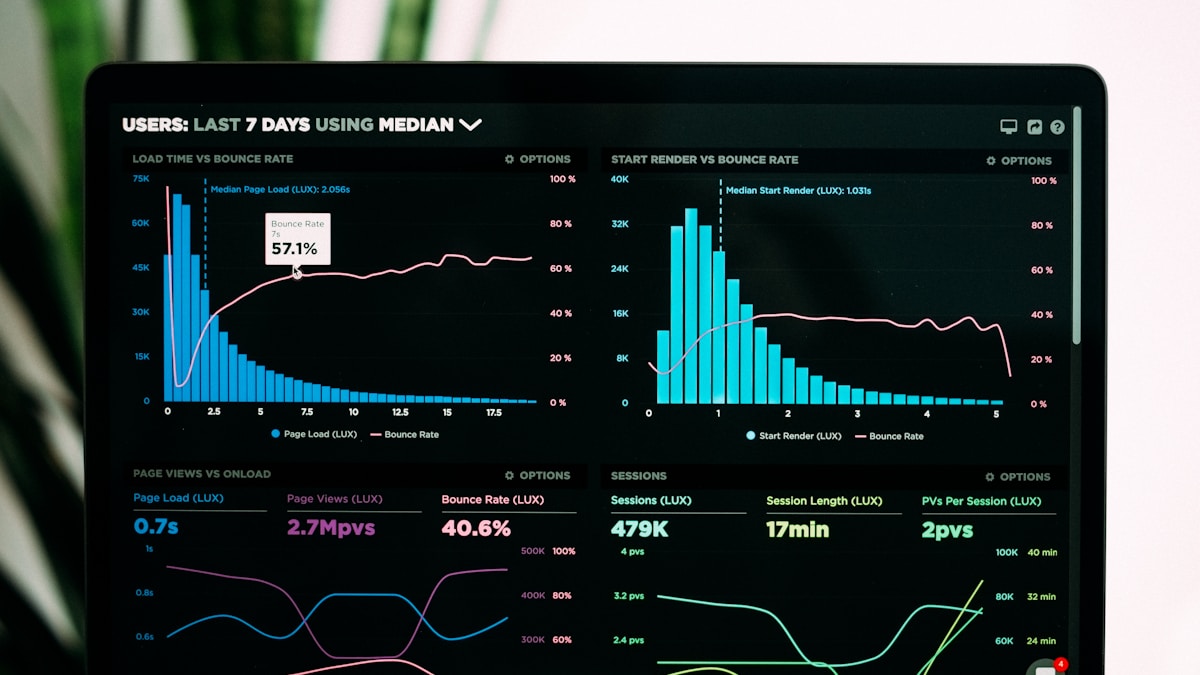
If your analytics dashboard tells you that users abandon checkout, session replay shows you why—in the user's own clicks, scrolls, hesitations, and errors.
Session replay (also called session recording or user session replay) is a qualitative analytics technique that reconstructs a visitor's journey through your website or product. Instead of inferring behavior from aggregate metrics alone, you watch a playback of DOM interactions: mouse movement, taps, scroll depth, form inputs, page transitions, and JavaScript errors—synced to a timeline you can filter, share, and annotate.
For product managers validating a redesign, UX designers diagnosing friction, CRO specialists investigating drop-offs, and SaaS founders trying to reduce churn, session replay bridges the gap between what happened in the data and what it felt like for the user.
This guide explains session replay from first principles: how the technology works, where it fits alongside tools like Google Analytics, heatmaps, and product analytics platforms, what privacy and compliance require in 2026, and how high-performing teams turn replays into measurable UX and conversion improvements.
Table of Contents
- Quick Summary
- The Problem Session Replay Solves
- What Is Session Replay?
- How Session Replay Works
- Session Replay vs Related Tools
- What Session Replay Is Good For
- Real-World Examples
- Best Practices for Using Session Replay
- Common Session Replay Mistakes
- Session Replay Software Compared
- Privacy and Compliance
- Frequently Asked Questions
- Key Takeaways
- Conclusion
Quick Summary
Session replay in one sentence
Session replay is a reconstructed playback of user interactions on a web page or app—built from captured DOM changes and input events, not a literal video file of the user's screen.
- Definition: Session replay records structural changes to the page (DOM mutations), pointer events, scroll positions, and metadata like viewport size—then replays them in a sandboxed player.
- Primary value: It explains why users struggle, rage-click, abandon forms, or fail to discover features—context that aggregate metrics cannot provide alone.
- Best paired with: Event analytics (Google Analytics, Mixpanel, PostHog), heatmaps, funnels, and error monitoring.
- Not the same as: Screen recording, CCTV-style video capture, or session logs from server-side analytics.
- 2026 priority: Privacy-by-design (masking, consent, retention limits) is non-negotiable under GDPR, CPRA, and emerging AI governance expectations.
The Problem Session Replay Solves
Traditional analytics excels at scale. Google Analytics tells you that 62% of mobile users exit on step two of onboarding. Mixpanel shows that activation dropped after a release. Funnel reports highlight where conversion falls off.
What they rarely explain is the interaction pattern behind the number:
- Did users miss the primary CTA because it appeared below the fold?
- Did a validation error appear off-screen on mobile?
- Did a modal trap focus and block form submission?
- Did users search for a feature that exists but is poorly labeled?
Usability research methods like moderated user tests answer these questions deeply—but for small samples, high cost, and slow turnaround. Session replay offers a middle path: qualitative insight at quantitative scale.
Teams that rely only on dashboards often optimize the wrong thing. They A/B test button colors when the real issue is a broken autocomplete field. Session replay reduces guesswork by letting you observe failure modes directly, then validate fixes with before-and-after replays and funnel metrics.
What Is Session Replay?
Session replay is technology that captures a user's interaction session and reconstructs it as a playable timeline in your analytics dashboard.
Each session typically maps to a single visit (or a defined user journey segment). The replay shows:
- Pages and SPA route changes the user navigated
- Clicks, taps, and hovers (depending on tool configuration)
- Scroll behavior and viewport changes
- Text input (often masked for sensitive fields)
- JavaScript console errors and network failures (in advanced platforms)
- Device, browser, geography, and referral metadata
Unlike a screen recording, session replay does not capture pixels from the user's monitor or camera. It captures instructions—what changed in the page structure and which events fired—then re-renders those changes inside an isolated player.
That distinction matters for performance, privacy, and accuracy. Replays reflect your site's DOM and CSS at capture time. If your layout shifts because of a late-loading font or a third-party widget, the replay shows that behavior—as the user experienced it—not a generic video frame.
Session replay vs session recording
The terms are often used interchangeably in marketing copy. In practice:
| Term | Typical meaning |
|---|---|
| Session replay | DOM-based reconstruction; industry-preferred term in 2026 |
| Session recording | Same core technology; sometimes implies video-style UX in the player |
| User session recording | Emphasizes the full visit narrative across pages |
For buyers, focus on capture method, masking controls, and performance impact—not the label on the feature page.
How Session Replay Works
Modern session replay tools follow a similar pipeline. Understanding it helps you evaluate vendors, debug missing data, and set realistic privacy policies.
1. Snippet or SDK installation
A lightweight JavaScript snippet (websites) or mobile SDK (iOS/Android/React Native) loads with your application. Leading tools defer heavy work, batch events, and sample sessions on high-traffic properties to limit overhead.
2. Event and mutation capture
The recorder subscribes to:
- DOM mutations (nodes added, removed, attribute changes)
- Input events (with masking rules for passwords, credit cards, etc.)
- Pointer and scroll events
- Navigation events (including SPA history API changes)
- Viewport and resize events
Libraries often use MutationObserver and patched event listeners. The capture layer serializes changes into a compact event stream rather than storing full HTML snapshots on every tick—though periodic full snapshots anchor reconstruction.
3. Compression and transmission
Events buffer client-side and upload in batches to the vendor's ingestion API. Compression, sampling, and network-aware flushing keep impact low. Reputable vendors publish guidance on performance budgets; many target sub-50ms main-thread overhead per interaction burst.
4. Reconstruction in the player
The dashboard player applies the event stream to a sandboxed DOM mirror. CSS from your production site is loaded so replays visually match what users saw. Timeline controls let you skip idle time, jump to errors, and speed up playback.
5. Enrichment and search
Sessions are indexed by URL, events, tags, rage clicks, UTM parameters, user IDs (if provided), and custom attributes. AI-assisted platforms—including DeepSync AI Insights—summarize sessions, cluster friction patterns, and surface anomalies without requiring analysts to watch thousands of hours manually.
Diagram recommendation: Session replay architecture
Create a horizontal flow diagram with five blocks: User Browser → Capture Layer (DOM events) → Ingestion API → Session Store → Replay Player + Analytics UI. Add a side branch for Privacy Masking applied at capture time before upload.

Session Replay vs Related Tools
Session replay is one layer in a modern experience analytics stack. It complements—not replaces—other tools.
Session replay vs Google Analytics
Google Analytics measures traffic, acquisition, and conversion events at aggregate scale. It answers: How many users completed signup? Which campaign drove revenue?
Session replay answers: What did individual users do when signup failed? Link GA4 segments to replay filters (e.g., mobile + exit on /pricing) for efficient investigation.
Session replay vs heatmaps
Heatmaps aggregate clicks, scroll depth, and attention across many sessions on a single page view. They excel at finding dead clicks and ignored CTAs.
Session replay excels at sequential context—the order of actions, error recovery attempts, and multi-page journeys. Use heatmaps to prioritize where to look; use replays to understand what happened.
Session replay vs product analytics (Mixpanel, PostHog)
Mixpanel and PostHog focus on event schemas, cohorts, retention, and experimentation. PostHog notably bundles session replay with product analytics.
When event data shows a retention cliff at day seven, replays reveal whether users failed to reach the activation milestone or encountered a paywall surprise.
Session replay vs screen recording
Screen recording captures video of a device display—common in QA tools and moderated research. Session replay captures page structure and interactions within your app boundary.
Screen recordings may include OS notifications, personal bookmarks, and other out-of-scope content. DOM replay stays within your application surface—still sensitive, but easier to mask and govern.
Session replay vs Microsoft Clarity, Hotjar, FullStory, and peers
Tools like Microsoft Clarity, Hotjar, FullStory, Smartlook, Mouseflow, Lucky Orange, and Contentsquare all offer session replay or equivalent capabilities—with different pricing, AI features, enterprise governance, and ecosystem focus.
Clarity stands out for free, unlimited replay on many sites. Enterprise suites like Contentsquare target large digital experience programs. FullStory emphasizes searchable DX data and developer-friendly diagnostics. Hotjar and Lucky Orange popularized replay for SMB marketers.
DeepSync combines session recordings, heatmaps, funnels, and AI summaries in a privacy-conscious stack aimed at teams that want Clarity-class accessibility with richer behavior intelligence.
What Session Replay Is Good For
UX and product discovery
- Validate whether users notice new UI elements
- Identify confusing labels, layout hierarchy issues, and broken responsive breakpoints
- Watch how users interpret empty states and zero-result searches
Conversion rate optimization
- Diagnose checkout field errors and payment gateway failures
- Compare behavior on landing page variants beyond click-through rate alone
- Find hesitation patterns before form submission
Bug reproduction and support
- See the exact steps that triggered a JavaScript error
- Share replay links with engineering instead of vague tickets
- Reduce back-and-forth with customers ("what were you clicking?")
SaaS onboarding and churn reduction
- Observe where trial users stall in setup wizards
- Detect feature discoverability problems in complex dashboards
- Connect replay tags to cancellation surveys for qualitative depth
Compliance and accessibility signals
While replay is not a substitute for WCAG audits, it can surface keyboard trap symptoms, focus loss after modal close, and unreadable contrast in real content—not just lab conditions.
Contextual CTA
When replay volume outpaces your team's review capacity, AI-assisted session analysis helps you prioritize the sessions that matter—rage clicks, failed conversions, new release windows—without watching everything manually. Explore DeepSync session recordings with built-in behavior intelligence.
Real-World Examples
Example 1: E-commerce checkout abandonment
Signal: GA4 shows 40% drop-off at shipping step. Replay review: Mobile users select a saved address, but the shipping method panel renders below the fold and never scrolls into view. Users tap "Continue" repeatedly (rage clicks detected). Fix: Promote shipping methods above the fold on mobile; add inline validation. Validation: Replay + funnel shows reduced rage clicks and higher step completion.
Example 2: SaaS trial activation
Signal: Mixpanel cohort shows users who invite teammates retain 2× better—but only 8% find invite flow. Replay review: Users open Settings, scan the sidebar, then use global search with partial keywords that return no results. Fix: Add onboarding tooltip and empty-state CTA on dashboard. Validation: Event rate for teammate_invited increases; replays confirm new path.
Example 3: Content site ad layout regression
Signal: Bounce rate spikes on article pages after ad slot change. Replay review: An interstitial reload shifts content downward mid-read, causing mis-taps and immediate back navigation. Fix: Reserve ad container height with CSS aspect-ratio placeholder. Validation: Scroll depth heatmaps and replay timelines stabilize.
Example 4: Support-led bug report
Signal: Customer reports "payment won't go through." Replay review: User enters correct card data, but third-party fraud script blocks submit with invisible iframe error. Fix: Engineering adjusts z-index and error surfacing; support closes ticket with shared replay link attached.
Best Practices for Using Session Replay
- Start with a hypothesis tied to metrics. Don't watch random sessions. Filter by funnel step, error, segment, or release date.
- Define a weekly replay review ritual. UX, product, and support rotate 10–20 sessions aligned to current OKRs.
- Combine qualitative and quantitative signals. Pair replay with heatmaps, GA4 paths, and error tracking.
- Tag and annotate insights. Build a shared repository of friction patterns so fixes survive team turnover.
- Sample intelligently on high traffic. Record 100% of sessions with errors; sample general traffic at 10–30% if needed for performance.
- Mask before you record—not after. Configure password, credit card, and PII field rules pre-launch.
- Integrate with experiment platforms. When running A/B tests, filter replays by variant ID to compare behavior, not just uplift.
- Close the loop. Every replay-driven fix should link to a metric movement tracked in your analytics stack.
Common Session Replay Mistakes
Watching sessions without a goal
Unstructured replay marathons create anxiety, not action. Always tie playback to a measurable question.
Ignoring mobile-specific sessions
Over 60% of web traffic is mobile on many properties. Desktop-only replay reviews miss tap target issues, keyboard overlays, and Safari-specific bugs.
Treating replay as a privacy afterthought
Teams enable recording first and ask legal later. That reverses the correct order—especially under GDPR and CPRA.
Over-sampling or under-sampling
Recording every session on a high-traffic homepage can inflate costs and noise. Recording too few misses rare but high-value failure modes. Tune sampling by page value and error rate.
Confusing replay with reproduction of backend state
Replays show front-end experience. A button may appear unresponsive while the API succeeds slowly—correlate with network timelines and server logs.
Failing to share insights cross-functionally
Replay value multiplies when support, product, and engineering use the same tool and tagging conventions—not siloed exports in separate tickets.
Session Replay Software Compared
The market spans free entry tools, mid-market UX suites, and enterprise DX platforms. Below is a practical comparison for teams evaluating in 2026.
| Capability | DeepSync | Microsoft Clarity | Hotjar | FullStory | PostHog |
|---|---|---|---|---|---|
| DOM session replay | Yes | Yes | Yes | Yes | Yes |
| Heatmaps | Yes | Yes | Yes | Yes | Add-on |
| Funnels / journeys | Yes | Basic | Yes | Advanced | Yes |
| AI session summaries | Yes | Copilot-style insights | Limited | Yes | Yes |
| Free tier | Trial / freemium | Free (unlimited replays) | Limited recordings | No | Generous self-host / cloud free tier |
| Best for | Teams wanting unified behavior intelligence + AI | Cost-sensitive sites needing baseline replay | Marketing & CRO teams | Product/engineering DX programs | Product teams wanting analytics + replay together |
| Capability | Smartlook | Mouseflow | Lucky Orange | Contentsquare |
|---|---|---|---|---|
| Session replay | Yes | Yes | Yes | Yes |
| Enterprise scale | Mid-market | Mid-market | SMB–mid | Enterprise |
| Friction scoring | Yes | Yes | Yes | Advanced |
| Mobile app replay | Yes | Limited | Limited | Yes |
| Typical buyer | Product + marketing | CRO + UX | SMB e-commerce | Large digital experience teams |
For a deeper vendor breakdown, see DeepSync vs Microsoft Clarity and our upcoming 2026 session replay software comparison guide.
Diagram recommendation: Conversion investigation workflow
Flow: Funnel drop detected → Filter sessions by step + device → Watch 15–25 replays → Tag friction pattern → Create fix → Validate with metrics + new replays. Add a feedback loop arrow from validation back to monitoring.
Privacy and Compliance
Session replay can capture personal data if you allow unmasked inputs or custom fields containing PII. Responsible programs implement privacy by design:
- Consent banners aligned with jurisdiction (EU opt-in, US notice-and-choice variations)
- Field-level masking for passwords, payment data, government IDs, health info
- Block lists for URLs containing account settings or medical records
- Retention limits (30, 60, or 90 days common for replay; shorter for high-risk sectors)
- Data processing agreements with vendors subprocessors documented
- Right-to-erasure workflows when users request deletion
The Mozilla Developer Network and W3C privacy guidance emphasize minimizing data collection to what is necessary—a principle that applies directly to replay configuration.
Nielsen Norman Group research consistently shows that user trust erodes when tracking feels invisible. Transparent consent copy improves both compliance and data quality (users who opt in represent intentional behavior).
Consult legal counsel for your industry. Healthcare, fintech, and edtech teams often require stricter masking, on-prem options, or replay disabled on authenticated account pages.
Key Takeaways
- Session replay reconstructs user sessions from DOM and interaction events—it is not literal screen video.
- Use replay to explain why metrics change, not to replace quantitative analytics.
- Pair replay with heatmaps, funnels, and event analytics for full context.
- Privacy masking, consent, and retention policies must be configured before scaling recording.
- Filter sessions by hypothesis; avoid unstructured binge-watching.
- Tools like Microsoft Clarity, Hotjar, FullStory, PostHog, and DeepSync differ in pricing, AI, and enterprise fit—choose based on workflow, not feature checklists alone.
- Close the loop: every insight should link to a shipped fix and a metric you can monitor.
Conclusion
Session replay has become essential infrastructure for data-informed UX—not because it replaces analytics, but because it humanizes the numbers. When a funnel step collapses or churn ticks upward, replay lets your team witness the experience in minutes instead of debating hypotheticals in a slide deck.
The teams that benefit most treat replay as a continuous discovery practice: hypothesis-driven filters, shared tagging, privacy-first configuration, and tight integration with experimentation and support workflows.
If you are building that practice in 2026, start with one high-value flow—checkout, signup, or activation—and watch twenty sessions filtered to drop-offs. You will almost certainly find a fix your dashboard alone would never surface.
Ready to see what your users actually experience?
Start with DeepSync session recordings—combine replay, heatmaps, funnels, and AI-powered behavior insights in one platform built for modern product and growth teams. View pricing or read the documentation to get set up in minutes.
Frequently Asked Questions
Related articles


Stay in the loop
Get the latest insights on product analytics and user behavior delivered to your inbox.


