8 Best FullStory Alternatives in 2026 (For Teams That Don't Need Enterprise Pricing)
FullStory is powerful but built for enterprise budgets. Compare the best FullStory alternatives in 2026 for session replay, heatmaps, and product analytics—by price, depth, and setup time.

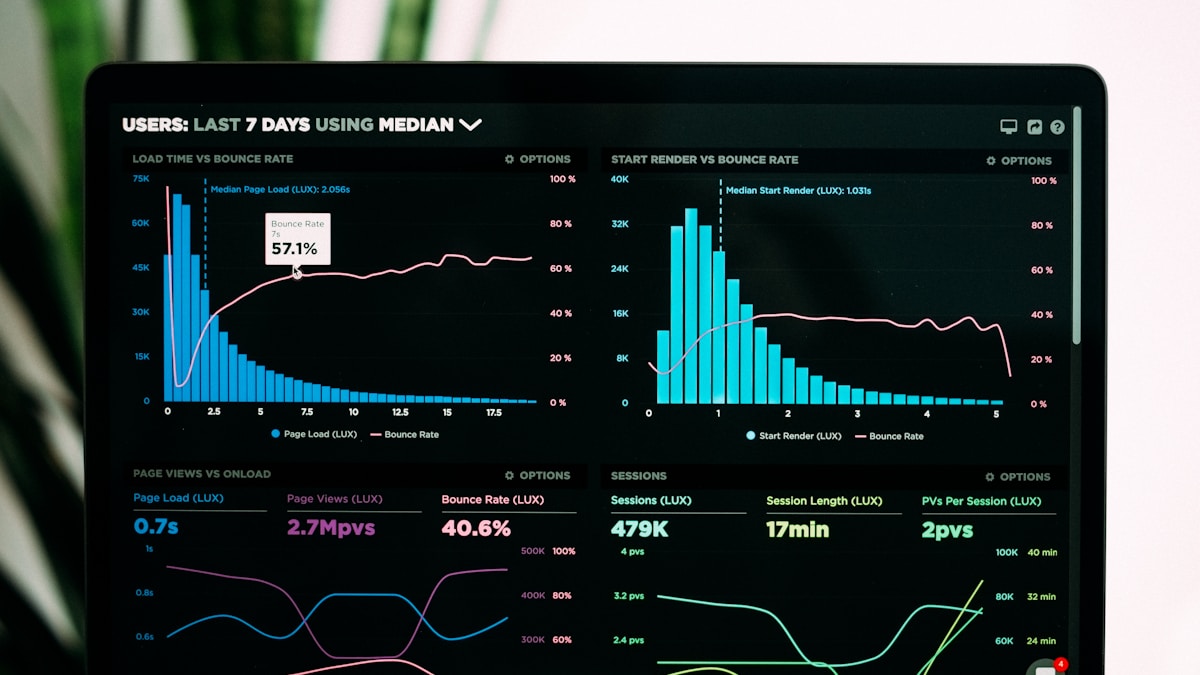
FullStory is one of the most capable digital experience platforms on the market. It is also one of the hardest to buy if you are a startup, an agency, or a growth team without a procurement department. Sales calls, annual contracts, and session-based pricing that climbs fast push a lot of teams to look elsewhere.
The good news: in 2026 you no longer need an enterprise contract to get session replay, heatmaps, frustration signals, and error context in one place. This guide compares the best FullStory alternatives by what they actually do well, who they fit, and what you give up.
Table of Contents
- Quick Summary
- Why Teams Look for a FullStory Alternative
- What to Look For
- The 8 Best FullStory Alternatives
- Comparison Table
- How to Choose
- How to Migrate Without Losing Insight
- Key Takeaways
Quick Summary
Short answer
If you want FullStory-style replay plus heatmaps and AI summaries with self-serve pricing, try DeepSync. If you want free and basic, try Microsoft Clarity. If you are an engineering-led team that wants replay tied to errors, look at LogRocket. If you want an all-in-one open-source product suite, look at PostHog.
- Best overall value: DeepSync — replay, heatmaps, funnels, JS errors, AI summaries; free plan and self-serve Pro.
- Best free option: Microsoft Clarity.
- Best for developers: LogRocket.
- Best open-source suite: PostHog.
- Best for marketing-led CRO: Hotjar, Mouseflow, Lucky Orange.
Why Teams Look for a FullStory Alternative
Teams rarely leave FullStory because the product is bad. They leave because of fit:
| Reason | What it looks like in practice |
|---|---|
| Pricing opacity | No public price list; you need a sales call to get a number |
| Contract length | Annual commitments before you have proven value |
| Session caps | Sampling or overage conversations as traffic grows |
| Complexity | A powerful product that only one or two people know how to use |
| Overlap | Already paying for separate heatmap, error, and analytics tools |
If your team is small, the real cost of FullStory is not the invoice—it is the time before anyone gets value from it.
What to Look For
Before comparing vendors, decide what "FullStory replacement" means for you:
- Replay fidelity — Does playback show the real DOM, network, and console, or just a rough video?
- Search and filters — Can you find "users who rage-clicked on checkout on mobile" in seconds?
- Frustration signals — Rage clicks, dead clicks, error clicks, u-turns.
- Heatmaps — Click, scroll, and attention, segmented by device.
- Funnels and journeys — To know which sessions to watch.
- Privacy — Masking by default, consent modes, GDPR export and erasure.
- Sampling — Does the tool record 100% of sessions up to your limit, or sample?
- Pricing model — Public, self-serve, and predictable.
The 8 Best FullStory Alternatives
1. DeepSync — best all-round value
DeepSync combines session recordings, heatmaps, funnels, user journeys, rage click detection, and AI insights in one lightweight script. Every plan records 100% of sessions up to its limit—no sampling.
- Strengths: Replay with console and network timeline, device-segmented heatmaps, JavaScript error grouping linked to replays, AI session summaries, live session view, real-user Core Web Vitals.
- Pricing: Free plan with 1,000 sessions a month; Pro is self-serve.
- Trade-offs: Younger ecosystem of integrations than FullStory.
- Best for: Startups, SaaS, e-commerce, and agencies that want FullStory-style depth without a sales cycle.
See the full DeepSync vs FullStory comparison.
2. Microsoft Clarity — best free option
Clarity offers free session recordings and heatmaps with no traffic limits worth worrying about for most sites.
- Strengths: Free, simple, fast setup, AI-generated summaries.
- Trade-offs: Limited funnels, limited segmentation, no dedicated support, data used under Microsoft's terms.
- Best for: Small sites that want a first look at behavior.
3. LogRocket — best for engineering teams
LogRocket pairs replay with error monitoring and performance data, which makes it popular with front-end teams.
- Strengths: Deep technical context, Redux/state logging, developer workflows.
- Trade-offs: Less focused on marketing and CRO use cases; pricing grows with sessions.
- Best for: Product engineering teams debugging web apps.
4. PostHog — best open-source product suite
PostHog bundles product analytics, session replay, feature flags, experiments, and surveys.
- Strengths: Broad feature set, self-host option, usage-based pricing with a free allowance.
- Trade-offs: Many products to configure; heatmaps and CRO workflows are less central.
- Best for: Technical product teams that want one platform for experimentation.
5. Hotjar — best for feedback plus behavior
Hotjar is known for heatmaps, recordings, surveys, and feedback widgets.
- Strengths: Easy to use, strong survey and feedback tooling.
- Trade-offs: Recording limits by plan; less technical depth than FullStory.
- Best for: Marketing and UX teams that want qualitative feedback.
6. Mouseflow — best for form and funnel analytics
Mouseflow focuses on recordings, heatmaps, funnels, and form analytics with a friction score.
- Strengths: Form analytics, friction scoring.
- Trade-offs: Interface feels dated to some teams; plan-based session limits.
- Best for: CRO specialists optimizing forms and checkouts.
7. Smartlook — best for web plus mobile apps
Smartlook supports web and native mobile recording with event tracking.
- Strengths: Mobile SDKs, event-based analytics.
- Trade-offs: Heatmap and CRO depth varies by platform.
- Best for: Teams with a mobile app as the main product.
8. Lucky Orange — best for small e-commerce stores
Lucky Orange combines recordings, dynamic heatmaps, live chat, and surveys.
- Strengths: All-in-one for small stores, live chat included.
- Trade-offs: Less suited to complex SaaS products.
- Best for: Shopify and small online stores.
Comparison Table
| Tool | Replay | Heatmaps | Funnels | JS errors | AI summaries | Self-serve pricing |
|---|---|---|---|---|---|---|
| DeepSync | Yes | Click, scroll, attention | Yes | Yes | Yes | Yes |
| Microsoft Clarity | Yes | Click, scroll | Limited | Limited | Yes | Free |
| LogRocket | Yes | Limited | Yes | Yes | Varies | Yes |
| PostHog | Yes | Basic | Yes | Yes | Varies | Yes |
| Hotjar | Yes | Yes | Yes | Limited | Varies | Yes |
| Mouseflow | Yes | Yes | Yes | Limited | Varies | Yes |
| Smartlook | Yes | Yes | Yes | Yes | Varies | Yes |
| Lucky Orange | Yes | Yes | Yes | Limited | Varies | Yes |
Feature sets change often—always confirm on each vendor's current pricing page.
How to Choose
- You want the closest thing to FullStory without the contract: DeepSync.
- Budget is zero: Clarity, then upgrade when you need funnels and segmentation.
- Your main user is an engineer: LogRocket or PostHog.
- Your main user is a marketer: Hotjar, Mouseflow, or DeepSync.
- You need mobile apps: Smartlook or DeepSync's React Native and Flutter SDKs.
Run a two-week bake-off
Install two tools on the same site for two weeks. Give the same three questions to both ("Why do users drop at step 2?", "What's broken on mobile checkout?", "Which CTA gets ignored?") and pick the tool that answers them fastest.
How to Migrate Without Losing Insight
- Export what matters — Saved segments, funnel definitions, and notes on known issues.
- Run both tools in parallel for 2–4 weeks so you have overlapping history.
- Recreate your top 5 funnels first—those drive most investigations.
- Re-apply masking rules for sensitive fields; audit them on real pages.
- Rebuild alerts for error spikes and rage clicks.
- Remove the old script once the team has used the new tool for real decisions.
With DeepSync, installation is one script tag—see the quickstart.
Key Takeaways
- Teams leave FullStory mainly over pricing, contracts, and complexity—not quality.
- The right alternative depends on who uses it most: product, marketing, or engineering.
- DeepSync offers the closest all-round match with self-serve pricing and no sampling.
- Run a short parallel bake-off with real questions before switching.
Conclusion
FullStory set the bar for digital experience analytics, but you no longer need an enterprise budget to reach it. Pick the tool that answers your team's real questions fastest.
Start free with DeepSync or read the detailed DeepSync vs FullStory comparison.
Frequently Asked Questions
Related articles


Stay in the loop
Get the latest insights on product analytics and user behavior delivered to your inbox.


